Introduction to Discrete Element Modeling
Definition and Key Concepts
Discrete Element Modeling (DEM) is a numerical method used to analyze and simulate the behavior of systems composed of distinct particles or discrete components. This modeling technique treats each particle as a separate entity, capturing interactions such as collisions, contact forces, and material flow dynamics. At its core, DEM relies on algorithms that calculate the motion and forces acting on each particle based on Newton’s laws of motion.
In essence, the discrete element method is pivotal for understanding granular materials and multiphase flow processes. By examining how particles interact under various conditions—such as compression, shear, and rotation—engineers can predict behavior patterns that inform design and operational strategies. For a deeper understanding of the intricate workings of this modeling technique, Discrete Element Modeling offers comprehensive insights relevant for both theoretical applications and practical implementations.
Importance in Engineering
The significance of Discrete Element Modeling in engineering cannot be overstated. It enhances the design and optimization of processes across various industries by providing insights into material behavior that traditional continuum approaches fail to capture. DEM's ability to simulate particle-particle interactions leads to improvements in efficiency and performance, particularly in fields such as civil engineering, mining, pharmaceuticals, and manufacturing.
DEM's utility extends to optimizing product formulations, enhancing material flow in processing plants, and predicting failure modes in construction materials. By enabling engineers to visualize and analyze complex systems, DEM contributes to innovative solutions that reduce costs and improve safety.
Applications Across Industries
Several industries utilize Discrete Element Modeling for its unique capabilities. Below are prominent applications:
- Pharmaceuticals: DEM is instrumental in optimizing powder flow characteristics during tablet manufacturing, ensuring consistency and quality in final products.
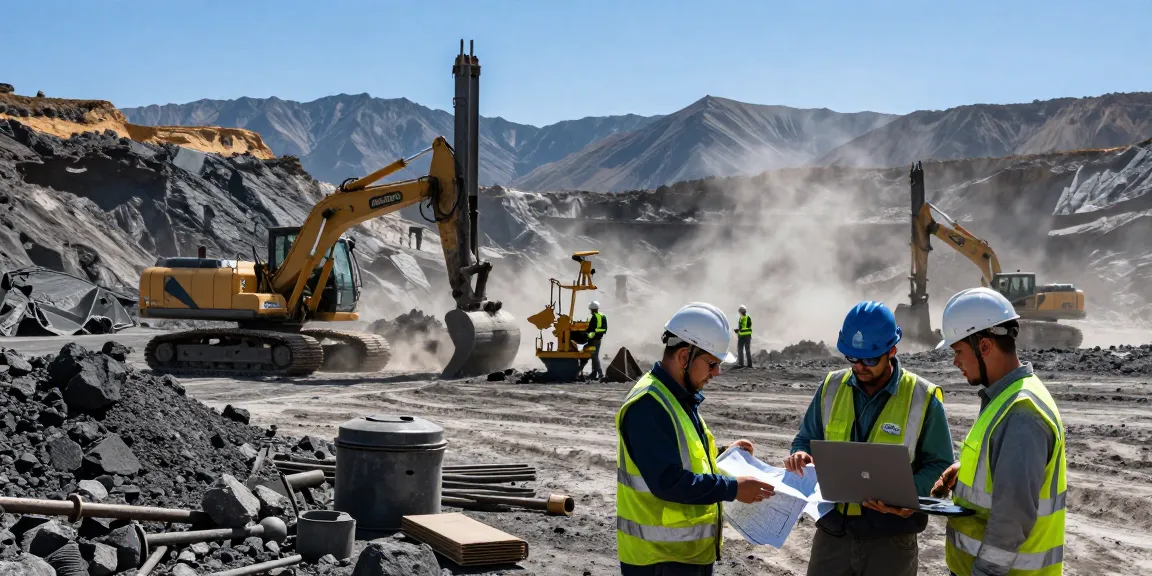
- Mining: In mining operations, DEM helps to simulate bulk material handling processes, aiding in the design of more efficient transport systems, crushers, and storage facilities.
- Construction: The construction industry employs DEM to analyze soil behavior during excavation and piling operations, leading to safer site management and foundation designs.
- Food Processing: In food processing, DEM is used to model the behavior of granular products like grains and powders, addressing challenges related to mixing, flow, and storage.
- Chemical Processing: Chemical engineers utilize DEM for reactor design, optimizing conditions for mixing and fluidization in reactions involving solid-phase materials.
Fundamentals of Discrete Element Modeling
Basic Principles of DEM
At its foundation, DEM operates on a few basic principles. Utilizing computational algorithms, DEM simulates the movements and interactions of particles through discrete time steps.
Key functionality includes:
- Modeling of particle shapes and sizes to capture real-world scenarios accurately.
- Detection of collisions between particles, which triggers force calculations and resulting motions.
- Implementation of contact laws that define friction and cohesion, critical for ensuring realistic behavior during simulations.
- Integration of external forces influencing particle dynamics, such as gravity and applied loads.
Comparison with Other Modeling Techniques
When comparing DEM with other computational methods such as Finite Element Analysis (FEA) and Computational Fluid Dynamics (CFD), it is essential to recognize the unique features of each:
- DEM vs. FEA: While FEA focuses on modeling continuous materials and their deformation under load conditions, DEM emphasizes discrete interactions. This makes DEM particularly suited for granular materials where discrete behavior is dominant.
- DEM vs. CFD: CFD simulates fluid flow and its behavior, often treating the fluid as continuous. In contrast, DEM looks at the discrete interactions between individual particles, making it better for scenarios where solid and fluid phases interact, such as in sediment transport.
The choice between these modeling approaches largely depends on the problem domain and specific requirements of the analysis.
Software Tools for DEM
A variety of software tools are available for conducting Discrete Element Modeling, each offering its own set of features and capabilities. Popular tools include:
- Particle Flow Code (PFC): Focuses on simulating the behavior of particles, specializing in rock mechanics and geological processes.
- EDEM: Known for its user-friendly interface, EDEM is widely used in industrial applications such as agriculture and mining.
- Rocky DEM: Designed for applications involving complex geometries and interactions, particularly in the bulk material handling sector.
- LAMMPS: An open-source tool that provides extensive capabilities for molecular dynamics and can be adapted for DEM simulations.
- DEM Software Add-ins: Some CAD software platforms offer integrated DEM capabilities, enhancing design workflows.
Implementing Discrete Element Modeling
Step-by-Step Guide to Setup
Implementing Discrete Element Modeling involves a systematic approach. Follow these steps for effective setup:
- Define the Problem: Outline the goals of your study, including the materials to be simulated and the specific phenomena to be analyzed.
- Select Software: Choose the appropriate DEM software that aligns with your requirements, considering factors like ease of use, capabilities, and support.
- Model Geometry: Create a digital representation of the system, including particle shapes, sizes, and the environment in which they will interact.
- Set Parameters: Define the material properties (like density, friction, and cohesion) and interaction rules that govern behavior during simulation.
- Run Simulations: Execute the simulations and monitor the system's response at each step to ensure accuracy and realism.
- Analyze Results: Post-process the output data to extract meaningful insights, validate against experimental results, and refine the model as needed.
Common Challenges and Solutions
Demanding simulations using DEM may face several challenges that can hinder effective implementation. Here are common issues and suggested solutions:
- Computational Cost: Large-scale simulations can be time-consuming. Solution: Use parallel processing capabilities available in most DEM software to speed up calculations.
- Calibration of Parameters: Defining material parameters can be challenging. Solution: Utilize experimental data to guide parameters and perform sensitivity analyses to understand their effects.
- Visualizing Complex Interactions: Analyzing results can be difficult when dealing with numerous particles. Solution: Implement advanced visualization tools within the software to aid in interpreting complex data sets.
Best Practices for Accurate Simulations
To ensure the accuracy and reliability of Discrete Element Modeling simulations, consider these best practices:
- Validate Models: Always validate your models against experimental data to confirm that the simulation outputs align with observable results.
- Optimize Parameters: Fine-tune particle interactions and environmental conditions iteratively based on preliminary results.
- Conduct Sensitivity Analyses: Analyze how variations in parameters affect results to identify critical factors that drive system behavior.
- Document Processes: Keep thorough documentation of your modeling process for transparency and reproducibility.
Case Studies in Discrete Element Modeling
Successful Applications in Process Engineering
Real-world applications of Discrete Element Modeling showcase its versatility in solving complex engineering problems. For instance, in materials handling within the mining industry, DEM has optimized the flow of crushed materials through chutes, reducing blockages and improving efficiency.
Another example includes using DEM in the food industry, where it has significantly enhanced the mixing processes of powdered ingredients, ensuring uniformity and quality in final products. These case studies underline DEM's effectiveness in process engineering and its ability to deliver tangible results.
Innovations in DEM Techniques
The realm of Discrete Element Modeling is continuously evolving with innovations that enhance its capabilities. Recent advancements include:
- Multiscale Modeling: Integrating DEM with computational fluid dynamics (CFD) and finite element methods (FEM) to create hybrid models, allowing for more comprehensive simulations.
- Machine Learning Applications: Leveraging machine learning algorithms to optimize parameter selection and improve prediction accuracy based on historical data.
- Real-Time Simulations: Developing methods for real-time DEM simulations that enable engineers to make instant adjustments during operational processes.
Lessons Learned from Real-World Implementations
Insights gleaned from case studies of Discrete Element Modeling highlight key lessons:
- Iterate and Validate: Continuous iteration based on validation against physical experiments leads to greater accuracy and reliability of simulations.
- Understand System Granularity: Appreciating the level of detail necessary for each specific application is crucial; oversimplifying complex interactions can lead to misleading results.
- Collaborate Across Disciplines: Successful DEM applications often involve collaboration with professionals in various fields to ensure all perspectives are considered during modeling.
Future Directions in Discrete Element Modeling
Trends Shaping the Future
The future of Discrete Element Modeling appears bright, with trends pointing towards enhanced capabilities and integrations:
- Increased Computational Power: As computational resources become more powerful and accessible, DEM will enable more extensive and detailed simulations.
- Soft and Hard Interactions: The development of models that can simulate both soft and hard interactions in complex materials will broaden the range of applications.
- Advancements in Visualization Techniques: Improvements in data visualization will facilitate better insights from simulation outputs, enhancing decision-making processes in industries.
Integration with Other Technologies
Future advancements in DISCRETE ELEMENT MODELING will likely include integration with emerging technologies such as:
- AI and Big Data: Integrating artificial intelligence will enable more sophisticated analyses and predictive modeling based on large datasets.
- Internet of Things (IoT): Real-time data collection from IoT devices can inform DEM simulations, enhancing their accuracy and relevance.
- Cloud Computing: Utilizing cloud platforms for DEM allows users to run complex simulations without requiring significant local computing resources.
Potential Research Areas
The field of Discrete Element Modeling is ripe for further research, with numerous areas of potential exploration, including:
- Novel Material Characterization: Researching methods to improve how discrete materials are characterized and modeled in various applications.
- Dynamic Loading Conditions: Investigating the effects of dynamic loading conditions on the behavior of particle assemblies for better prediction of real-world performance.
- Integration of DEM with Simulation Frameworks: Exploring ways to effectively blend DEM with other simulation methods for more holistic modeling approaches.
FAQs
What is Discrete Element Modeling?
Discrete Element Modeling simulates the behavior of systems of particles, useful in various engineering fields.
How does DEM differ from Finite Element Analysis?
While DEM focuses on discrete particles, Finite Element Analysis models continuous materials as a whole.
What industries use Discrete Element Modeling?
Industries like pharmaceuticals, mining, and manufacturing leverage DEM for process optimization and simulations.
Which software is best for Discrete Element Modeling?
Tools such as PFC, EDEM, and Rocky DEM are popular for conducting simulations in Discrete Element Modeling.
How can I learn Discrete Element Modeling?
Online courses and certifications are available, along with tutorials and documentation from specific software vendors.