1. Introduction to Discrete Element Modeling
In the realm of numerical modeling, Discrete Element Modeling (DEM) has emerged as a powerful tool to simulate the behavior of particulate systems. This computational modeling technique is pivotal for understanding the interactions of discrete particles in various engineering and scientific applications. As industries increasingly rely on simulations for more efficient design and analysis, DEM has become integral for accurately predicting material behaviors under a wide array of conditions.
1.1 What is Discrete Element Modeling?
Discrete Element Modeling (DEM) involves simulating the movement and interaction of distinct particles. Unlike continuum models, which treat materials as continuous, DEM recognizes the individual nature of particles and models their interactions through defined physical laws. This approach allows for precise analysis of granular materials such as powders, soils, and other bulk materials, which exhibit complex behaviors during motion and deformation.
1.2 Historical Background and Development
The roots of Discrete Element Modeling can be traced back to the 1970s when researchers started developing numerical methods to analyze granular materials. The method gained attention in the 1990s as computational power grew, leading to its widespread application in various fields. Over the years, advancements in particle modeling, contact algorithms, and data visualization have propelled DEM into a prominent position in both academic research and industrial applications.
1.3 Importance in Engineering and Science
The significance of DEM lies in its ability to model complex processes that occur in bulk material handling, soil mechanics, and even biological systems. By providing insights into particle interactions, forces, and material behavior, DEM enhances the understanding and optimization of processes such as material mixing, compaction, and transportation. Its versatility also supports innovations in material science and engineering across disciplines.
2. Fundamental Principles of Discrete Element Modeling
2.1 Key Concepts and Terminology
Several key concepts underpin DISCRETE ELEMENT MODELING, including particles, contact forces, and the time-stepping approach. Particles are the fundamental units that form the system, and their interactions are governed by models that calculate contact forces based on their shape, size, and material properties. The time-stepping method enables the simulation of particle movement through discrete time intervals, allowing for accurate tracking of changes in position and interactions over time.
2.2 Mathematical Foundations
The mathematical foundation of DEM is built on the principles of classical mechanics. Each particle is treated as an individual body that obeys Newton's laws of motion. The governing equations typically include the equations of motion for translations and rotations, as well as the forces arising from contacts, friction, and external influences. This mathematical framework allows for a detailed simulation of how particles behave under various conditions.
2.3 Particle Interaction Dynamics
The dynamics of particle interactions are central to DEM. When particles come into contact, several forces, including normal and shear forces, act on them. These forces determine whether the particles will stick together or slide past one another. The modeling of these interactions often involves sophisticated contact models, such as the Hertzian contact model, which provides insights into how particles interact based on their shapes and material properties.
3. Applications of Discrete Element Modeling
3.1 Industrial Applications
Discrete Element Modeling finds extensive applications in industries such as pharmaceuticals, agriculture, and construction. In pharmaceuticals, DEM can optimize tablet design by predicting how the granules will flow during processing. In agriculture, it helps in simulating the behavior of seeds during planting. Similarly, in construction, DEM is used to analyze soil behavior under load, crucial for foundation stability and infrastructure design.
3.2 Research and Development
In research settings, DEM has enabled breakthroughs in understanding granular materials. Scientists utilize this method to explore new materials and their properties under various conditions, leading to innovations in material design. By accurately modeling materials at a particle level, researchers can experiment with new formulations and predict their performance before physical testing, saving time and resources.
3.3 Limitations and Challenges
Despite its advantages, Discrete Element Modeling has limitations. One major challenge is computational cost; simulating a large number of particles requires significant computational power. Additionally, accurately modeling complex interactions among diverse materials can be difficult. Moreover, the accuracy of DEM simulations depends heavily on the parameters chosen, which can introduce uncertainties in the results if not done carefully.
4. Best Practices for Implementing Discrete Element Modeling
4.1 Software and Tools for DEM
Various software tools are available for DISCRETE ELEMENT MODELING, each offering unique features tailored to specific industries and applications. Popular options include LIGGGHTS, EDEM, and PFC. Selecting the appropriate software depends on factors such as ease of use, accuracy, and ability to handle the specific problems at hand. Familiarizing oneself with the capabilities of each tool can help maximize its potential in projects.
4.2 Common Mistakes to Avoid
When implementing DEM, several common pitfalls can lead to inaccurate results. One mistake is neglecting to validate simulations against experimental results, which can result in misconceptions about material behavior. Additionally, improper mesh generation or using inadequate particle models can skew results. It’s crucial to thoroughly test and refine the model before relying on its predictions.
4.3 Case Studies of Successful Implementations
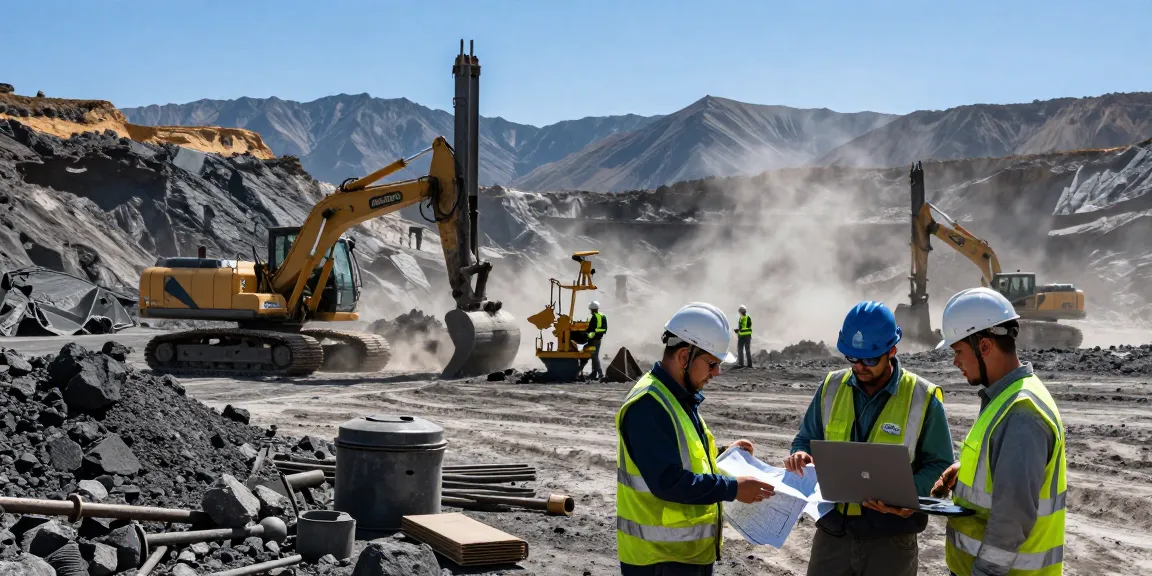
Numerous industries have successfully integrated DEM to enhance their processes. For instance, in the coal industry, DEM has been used to optimize the design of transfer chutes, reducing wear and improving flow efficiency. Another example is in the food industry, where it aids in the design of mixers to improve the homogeneity of blended products, ultimately leading to better quality control.
5. Future Directions in Discrete Element Modeling
5.1 Innovations in Algorithms and Techniques
The future of Discrete Element Modeling is promising, with ongoing research focused on developing faster algorithms and more accurate interaction models. Innovations such as GPU-accelerated simulations and machine learning integration are expected to drastically reduce computational times while improving the fidelity of models. These advancements will make DEM more accessible across various sectors and applications.
5.2 Integration with Other Modeling Methods
Future trends indicate a greater emphasis on integrating DEM with other modeling techniques, such as Finite Element Method (FEM) and Computational Fluid Dynamics (CFD). This multi-faceted approach will provide a more comprehensive understanding of complex systems that involve both discrete materials and continuum behaviors, thereby solving real-world challenges more effectively.
5.3 Potential Research Frontiers
Research in DISCRETE ELEMENT MODELING is continuously evolving, with potential frontiers including biomimetic materials, where DEM can simulate complex biological processes. Another area is the exploration of granular flows in microgravity environments, which could have implications for space exploration and planetary sciences. The ability to model and predict behaviors in diverse conditions will drive innovation and application across various disciplines.
FAQs about Discrete Element Modeling
1. What industries use Discrete Element Modeling?
Industries such as pharmaceuticals, agriculture, mining, and construction leverage DEM for optimizing processes and understanding material behaviors in granular systems.
2. What are the main benefits of using DEM?
The main benefits of DEM include accurate simulations of particle interactions, the ability to predict material behavior under various conditions, and aiding in process optimization.
3. What distinguishes DEM from other modeling methods?
DEM models individual particles and their interactions, while other methods like FEM treat materials as continuous, making DEM more suitable for granular materials.
4. What are common challenges in implementing DEM?
Common challenges include high computational costs, needing careful parameter selection for accuracy, and challenges in modeling complex particle interactions.
5. How do I choose the right software for DEM?
When choosing software for DISCRETE ELEMENT MODELING, consider factors like user-friendliness, specific features required for your project, and the software’s validation against real-world results.