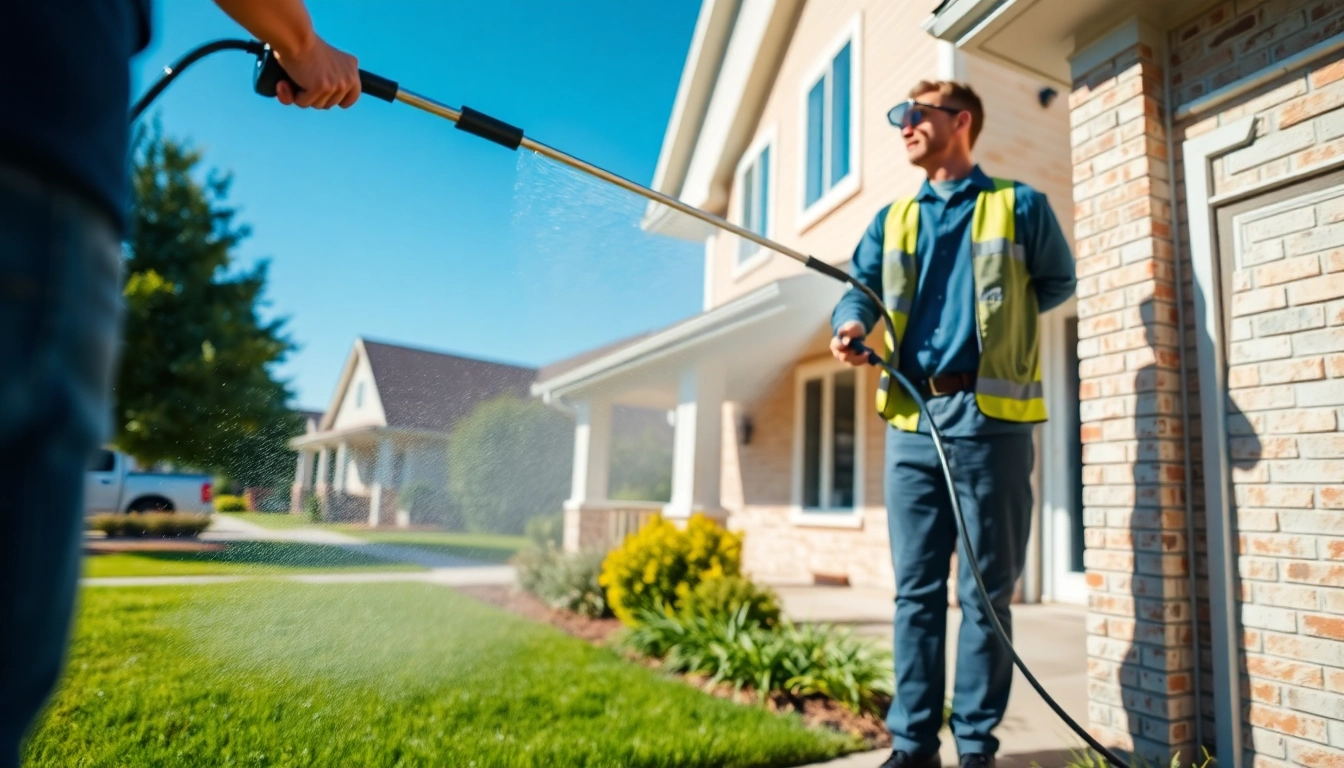
Understanding House Washing
What is House Washing?
House washing refers to the process of cleaning the exterior surfaces of a home using various methods and solutions to enhance its appearance and maintain its structural integrity. It typically involves removing dirt, mold, mildew, and other contaminants that accumulate over time. The House Washing process uses tools like pressure washers or soft washing systems, depending on the surface material and the extent of the buildup.
Benefits of House Washing
Regular house washing provides several advantages, including:
- Enhanced Curb Appeal: A clean exterior greatly improves the visual appeal of your home, making it more inviting.
- Preventative Maintenance: Removing harmful contaminants prevents possible damage to your home’s surfaces, extending their lifespan.
- Health Benefits: Eliminating mold, mildew, and allergens reduces health risks for occupants, particularly those with respiratory issues.
- Increased Property Value: A well-maintained exterior can increase property values, an essential factor if you plan to sell your home.
Common House Washing Methods
The two primary methods of house washing are pressure washing and soft washing:
- Pressure Washing: Involves using high-pressure water to remove dirt and grime. This method is effective for hard surfaces but may damage delicate materials.
- Soft Washing: Utilizes lower pressure and specialized cleaning solutions. This method is safer for softer surfaces like roofs, stucco, and painted walls, ensuring no damage is incurred.
Preparing for House Washing
Assessing Your Home's Needs
Before beginning the house washing process, assess the specific needs of your home. Factors to consider include:
- The age and material of your siding (vinyl, wood, stucco, etc.).
- The level of buildup or discoloration on your home’s exterior surfaces.
- Areas that require special attention, like mold-infested regions or heavily soiled areas.
Gathering Necessary Equipment
Prepare the equipment based on the chosen washing method:
- For Pressure Washing: You will need a pressure washer, extension wands, and appropriate nozzles.
- For Soft Washing: Gather a soft-wash system or a low-pressure sprayer, cleaning solutions, and protective gear.
- Safety Gear: Use goggles, gloves, and non-slip footwear to ensure your safety during the washing process.
Safety Precautions During House Washing
Safety is paramount while engaging in house washing. Follow these precautions:
- Ensure the area is clear of furniture, outdoor decor, and vehicles.
- Check that all electrical fixtures, vents, and windows are sealed to prevent water ingress.
- Be mindful of slippery surfaces after washing; allow time for them to dry.
Executing House Washing Techniques
Using Pressure Washers
When using a pressure washer, follow these steps:
- Connect the pressure washer to a water supply and ensure all fittings are secure.
- Select the appropriate nozzle (typically 25-degree for general washing).
- Begin washing from the top of walls or surfaces downward to avoid streaks.
- Maintain a consistent distance (about 2 feet) from surfaces to prevent damage.
Soft Washing vs. Pressure Washing
The choice between soft washing and pressure washing largely depends on the material being cleaned:
- Soft Washing: Recommended for roofs, painted surfaces, and areas prone to damage from high pressure.
- Pressure Washing: Best for concrete, brick, and hard surfaces that can withstand more force.
Recommended Cleaning Solutions
The effectiveness of house washing is significantly enhanced by using the right cleaning solutions:
- Detergents: Use for breaking down stubborn grime and stains.
- Disinfectants: For areas with heavy mold or mildew growth, especially on roofs and siding.
- Eco-Friendly Solutions: Consider biodegradable options to minimize environmental impact.
Maintaining Your Home After House Washing
Inspection of Exteriors After Washing
After washing, inspect all exterior surfaces for any remaining stains or damage. This post-wash check is essential to ensure the integrity of your home’s surfaces:
- Look for any areas that may require additional attention.
- Ensure gutters are clear of debris and functioning properly.
Preventing Future Grime Build-Up
To keep your home looking its best, take preventative measures:
- Trim overhanging branches and plant foliage that can trap moisture against the house.
- Regularly check and clean gutters to ensure proper drainage.
- Consider applying protective coatings to surfaces that are more susceptible to grime.
Scheduling Regular Cleaning
Establish a routine cleaning schedule to maintain the cleanliness of your home, which may include:
- Annual deep clean for the entire exterior.
- Seasonal inspections to catch any signs of grime early.
FAQs about House Washing
What is the average cost of house washing?
The average cost of house washing ranges between $241 to $418. Prices can fluctuate based on the size and condition of the home.
What is included in a house wash?
A standard house wash typically includes the removal of dirt, mold, and organic materials from the exterior. Specialized stains, like oil, may need separate treatment.
How often should I wash my house?
It’s generally advised to wash your house every 1-2 years to maintain its appearance and prevent mold growth.
Can I pressure wash my house myself?
Yes, you can pressure wash your house. However, it's crucial to use the appropriate equipment and follow safety guidelines to avoid damaging surfaces or causing injury.
Is house washing safe for all surfaces?
While most surfaces can be safely washed, delicate materials like old wood or specific types of siding may require more careful approaches like soft washing.