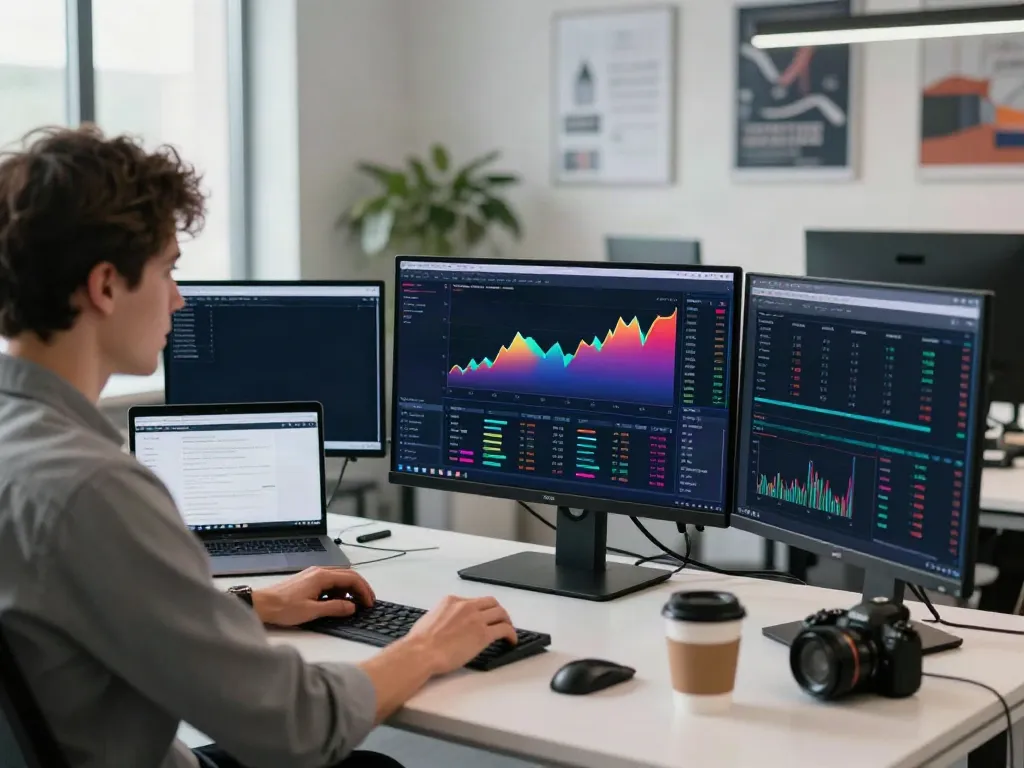
Understanding Market Data for Quant Trading
In the world of quantitative trading, the importance of accurate and timely market data cannot be overstated. As traders and financial analysts delve into the complexities of algorithmic strategies, the quest for reliable data becomes paramount. Blockchain innovation has paved the way for new solutions that streamline data access, reduce dependence on multiple vendors, and enhance trading efficiency. This quest for efficiency resonates particularly in the realm of cryptocurrency trading, where market dynamics can shift rapidly and require instantaneous reactions from traders and algorithms alike. When exploring options, how to backtest is a fundamental skill that enhances strategy testing and execution precision.
The Basics of Market Data
Market data refers to the collection of information related to the trading of financial instruments; it includes price quotes, orderbook data, transaction volumes, and other relevant statistics. In the realm of quantitative trading, market data serves as the foundation upon which traders build their strategies. Understanding the mechanics behind various types of market data is essential for developing robust trading algorithms.
Types of Market Data in Cryptocurrency Trading
Market data in cryptocurrency trading can be categorized into several types, including:
- Price Data: This includes the historical and current prices of assets.
- Order Book Data: Displays live snapshots of buy and sell orders, helping to understand market depth.
- Trade Data: Consists of actual transactions that have occurred on exchanges, providing insights into market activity.
- Bar Data: Aggregated price data over specific intervals, often used in backtesting.
The ability to access and analyze each of these types of data is crucial for quant traders aiming to refine their strategies.
APIs: The Backbone of Quant Trading
APIs (Application Programming Interfaces) play an integral role in enabling access to market data. They provide standardized methods for programs to communicate, making it easier for traders to integrate data from multiple exchanges into their trading platforms. This seamless integration supports effective communication between different systems, allowing traders to automate their strategies efficiently.
Effective Backtesting Strategies in Cryptocurrency
Backtesting is a critical process in quantitative trading, enabling traders to evaluate their strategies against historical data to gauge potential effectiveness in live markets. A well-structured backtesting strategy not only provides insights into a trading strategy's viability but also highlights any potential flaws before actual capital is deployed.
How to Backtest: Step-by-Step Process
To effectively backtest a trading strategy, follow these general steps:
- Define the Trading Strategy: Specify entry and exit rules, risk management parameters, and overall objectives.
- Obtain Historical Data: Gather the necessary market data, ensuring that it is clean and relevant to your trading strategy.
- Simulate Trades: Use historical data to execute trades as if in a live environment, adhering strictly to your predefined rules.
- Analyze Results: Measure performance against predefined metrics such as Sharpe ratio, maximum drawdown, and win rate to evaluate strategy effectiveness.
- Optimize: Fine-tune the strategy based on results, while ensuring to avoid overfitting, which can lead to poor live performance.
Choosing the Right Software for Backtesting
Selecting an appropriate backtesting platform is vital. Popular options include:
- Backtrader: A flexible Python library that supports various data feeds.
- VectorBT: Allows for extensive performance analysis; great for sophisticated traders.
- vn.py: Offers modular architecture and is highly customizable.
- Zipline: Initially developed by Quantopian, it is a Pythonic algorithmic trading library.
The right choice will depend on your programming skills and specific needs, such as support for various data types and integration with live trading systems.
Key Metrics to Measure Strategy Performance
Quantitative traders should focus on several key metrics when evaluating their strategies post-backtesting:
- Sharpe Ratio: Measures risk-adjusted return, indicating how much excess return is received for the extra volatility endured.
- Maximum Drawdown: Evaluates the largest peak-to-trough loss, providing insights into potential risk.
- Win Rate: Indicates the percentage of winning trades against total trades executed.
- Return on Investment (ROI): Measures the gain or loss generated relative to the investment cost.
Integrating Live Data for Real-Time Trading
After conducting thorough backtesting, the next critical phase is integrating live data into the trading framework to execute trades in real-time effectively. This transition from backtest results to live execution can significantly influence trading outcomes.
Understanding Execution Gateways and APIs
Execution gateways serve as the conduit between your trading algorithms and financial markets. They facilitate real-time order execution and are linked directly to trading venues. By employing sophisticated APIs, traders can automate their order management processes while ensuring that trades are executed at the desired timing and pricing.
Real-Time Data Subscription: Best Practices
Maintaining updated access to live market data is crucial for successful trading. Best practices for real-time data subscription include:
- Choosing Reliable Data Providers: Select a provider that offers low-latency feeds to remain competitive.
- Data Redundancy: Implement failover mechanisms to prevent downtime in case of provider issues.
- Efficient Data Processing: Streamline the data handling processes to enable quick decisions based on live information.
Strategies for Successful Live Execution
Successful live trading requires that you follow certain strategies, such as:
- Slippage Management: Incorporate measures to minimize slippage, effectively ensuring that your trades get executed as close to desired price points as possible.
- Order Types Usage: Utilize a variety of order types (market, limit, stop-loss) based on the prevailing market conditions and your strategy's requirements.
- Consistent Monitoring: Always monitor algorithms for performance and anomalies to ensure everything operates as expected.
Risk Management and Strategy Optimization
Effective risk management is integral to achieving long-term success in quantitative trading. It involves not just the management of capital at risk but also continuous strategy optimization based on the ever-changing market landscape.
Common Risks in Quant Trading
Common risks faced by quantitative traders can include:
- Model Risk: The risk that a trading model does not accurately predict market behavior.
- Market Risk: Fluctuations in asset prices that can significantly impact trading outcomes.
- Liquidity Risk: The inability to execute trades at prevailing market prices due to insufficient market depth.
- Regulatory Risk: Changes in market regulations that can affect trading strategies and operations.
Portfolio Diversification Techniques
To mitigate risks, traders should apply effective portfolio diversification techniques, including:
- Asset Allocation: Spread investments among different asset classes to buffer against volatility.
- Correlation Analysis: Invest in assets with low correlation to minimize the risk associated with downturns in specific sectors.
- Dynamic Rebalancing: Regularly adjust portfolio holdings based on performance and changing market conditions.
Using Analytics to Optimize Strategies
Leveraging analytics is essential for maintaining and enhancing trading strategies. Key methods include backtesting simulations that help in understanding performance metrics and conducting scenario analyses to evaluate how strategies perform in varying market conditions.
Future Trends in Quant Trading and Backtesting
As the landscape of quantitative trading evolves, staying informed about emerging trends is critical for traders. Innovations in technology and methodologies will continue to shape the way strategies are developed and executed.
The Role of AI and Machine Learning in Trading
Artificial Intelligence (AI) and Machine Learning (ML) are becoming increasingly prevalent in quantitative trading as they allow for more sophisticated data analysis and predictive modeling. Traders can leverage AI algorithms to uncover patterns in market data that would be unidentifiable through traditional analysis.
Decentralized Finance Impact on Backtesting
The rise of Decentralized Finance (DeFi) provides new opportunities and challenges for backtesting. With access to on-chain data and smart contracts, traders can evaluate decentralized protocols and new asset classes that were previously unavailable in traditional finance.
Emerging Technologies to Watch in 2026
The future of quant trading will be influenced by several advancing technologies, including:
- Blockchain Interoperability: Improved cross-chain trading capabilities are likely to enhance trading strategies.
- Enhanced Analytics Platforms: Tools that leverage big data and AI for predictive insights will gain traction.
- Regulatory Tech Solutions: Innovations aimed at compliance will assist traders in navigating the evolving regulatory landscape.
What Are the Security Risks in Quant Trading?
As traders adopt advanced technologies, understanding security risks becomes paramount. These can include phishing attacks, API key theft, and external hacks that may compromise trading strategies.
What Tools Can I Use for Quant Trading?
Quant traders have a growing arsenal of tools at their disposal, including:
- Algorithmic Trading Platforms: Software designed specifically for algorithmic trading and backtesting, like MetaTrader or MultiCharts.
- Data Analytics Tools: Systems like Tableau or Python libraries for sophisticated data manipulation and visualization.
- Backtesting Engines: As discussed, various platforms support backtesting, from Backtrader to commercial-grade solutions.
How Can I Find Historical Data for Backtesting?
Acquiring historical data for backtesting can involve both free and premium sources. Various cryptocurrency exchanges offer historical data directly, but for comprehensive datasets, consider specialized providers that aggregate data across multiple exchanges.
Is Backtesting Reliable for Future Performance?
While backtesting can offer valuable insights, it is essential to remember that it does not guarantee future performance. Markets can be unpredictable, and past results may not be indicative of future outcomes. It is crucial to apply the concept of Do Your Own Research (DYOR) and remain cautious while investing in cryptocurrency.