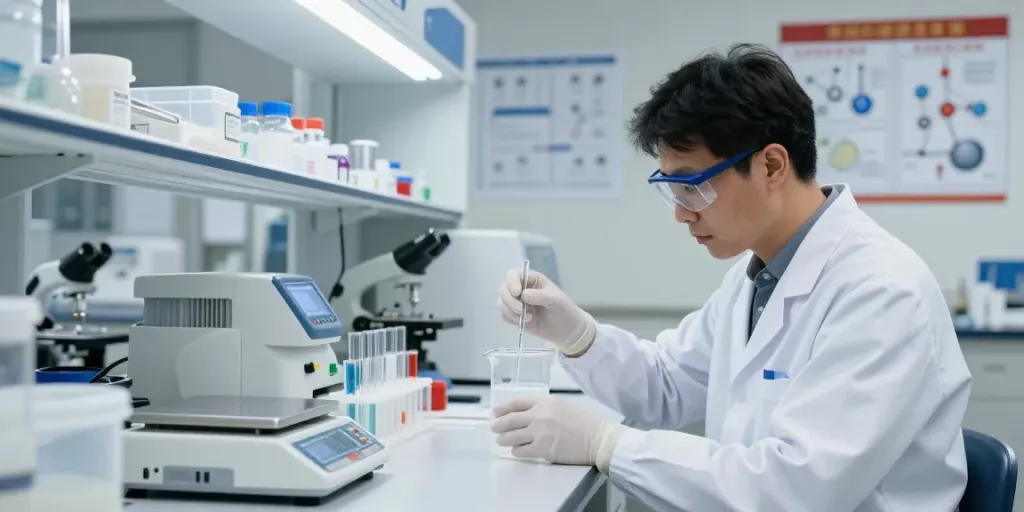
The Importance of Reconstitution in Peptide Research
In the vast sphere of biomedical research, the precise handling of peptides is paramount. Reconstitution, the process of dissolving a lyophilized peptide in a suitable solvent, plays a critical role in ensuring the integrity and efficacy of these biomolecules. The choice of solvents and reconstitution strategies can significantly affect downstream applications, making a thorough understanding of this process essential for researchers. Various laboratories rely on effective reconstitution solution options to successfully conduct experiments involving peptides. As research expands, so does the necessity for advanced techniques in peptide reconstitution.
Understanding Reconstitution Solutions
Reconstitution solutions are crucial for preparing peptide solutions from their solid, lyophilized states. These solutions are typically composed of buffers, salts, or solvents that help maintain peptide stability, enhance solubility, and ensure biological activity. The chemistry involved in selecting a reconstitution solution is complex, as it can affect the pH, ionic strength, and overall environment in which the peptide will function.
When choosing a reconstitution solution, a balance must be struck between solubility and stability. For instance, acetic acid is commonly used for peptides that require a low pH environment, while phosphate-buffered saline (PBS) is often preferred for biological assays due to its physiological compatibility. Understanding these factors is imperative for researchers aiming to maximize the effectiveness of their peptide applications.
Applications of Reconstitution Solutions in Laboratories
Laboratories utilize reconstitution solutions across a variety of peptide applications, including drug development, therapeutic interventions, and biomarker discovery. For example, in drug development, the solubility of a peptide can influence its delivery mechanism and therapeutic effectiveness. Reconstitution solutions that preserve the biological activity of peptides help ensure that therapeutic candidates are viable.
In diagnostics, specifically biomarker discovery, researchers often require peptides for assays. The reconstitution process must guarantee that peptides are both soluble and stable, to produce accurate and reliable results. By choosing the right reconstitution solution, labs can enhance the reproducibility of their studies and facilitate the transition of research findings into clinical applications.
Common Challenges in Peptide Reconstitution
Despite its importance, peptide reconstitution presents various challenges. One common issue is the aggregation of peptides, which can lead to reduced functionality and unreliable experimental outcomes. Aggregation is often exacerbated by incorrect solvent choices or improper handling during the reconstitution process, making it essential for researchers to adopt best practices.
Another significant challenge is the degradation of peptides through hydrolysis or oxidation. These processes can be influenced by pH conditions and the choice of solvents, prompting researchers to explore stabilizers and alternative methods that mitigate such risks. Understanding these challenges allows researchers to strategize effectively and ensure high-quality peptide preparations for their work.
Choosing the Right Reconstitution Solution
Selecting an appropriate reconstitution solution is vital for achieving successful experimental outcomes. Researchers must consider various factors to make an informed decision about their solvent choices.
Factors Influencing Solution Selection
Several factors influence the selection of a reconstitution solution, including peptide stability, solubility, and compatibility with assay systems. Factors such as the specific peptide sequence, intended use, and environmental conditions are critical to consider. For example, peptides containing sensitive amino acid residues, such as cysteine, may require a reducing agent in their reconstitution solution to maintain structural integrity and prevent oxidation.
Additionally, peptide concentration is another crucial parameter that impacts solution selection. Higher concentrations may lead to aggregation, requiring solvents that can adequately dissolve peptides while maintaining their functional properties.
Comparing Various Reconstitution Options
Reconstitution solutions can vary widely, from simple buffers to complex media that contain specific stabilizers. Typical options include sterile water, acetic acid, and saline solutions. The choice among these solutions should be based on experimental needs. For example, while sterile water may suffice for general applications, a buffer may be necessary for studies requiring strict pH control. Researchers should meticulously compare these options, considering both their advantages and limitations in the context of their required applications.
Best Practices for Optimal Results
Implementing best practices in peptide reconstitution is imperative to achieve optimal results. This includes following protocols for handling lyophilized peptides with care and ensuring that equipment and reagents are sterile. Additionally, reconstitution often requires gentle mixing to avoid damaging sensitive peptide structures. Using a vortex mixer at low speeds or manual pipetting to avoid shear stress can help mitigate potential risks during the reconstitution process.
Moreover, the use of specific visual cues can help determine the success of the reconstitution. An absence of turbidity or aggregation can signal proper solubility and successful preparation. By adhering to these best practices, researchers can effectively enhance the quality and reliability of their peptide studies.
Step-by-Step Guide to Reconstituting Peptides
Reconstituting peptides is a meticulous process that must be executed with attention to detail. This step-by-step guide outlines essential procedures to follow for effective peptide reconstitution.
Preparing Equipment and Workspace
Before reconstituting peptides, it is vital to prepare the workspace and equipment. Ensure that all surfaces are sterilized, and gather necessary supplies, including gloves, sterile syringes, and appropriate solvents. It is also recommended to work in a laminar flow hood if possible to minimize contamination risks. Using pre-chilled equipment can prevent temperature increases that may affect peptide integrity during the process.
Calculating Required Volumes
Calibrating the appropriate volumes for reconstitution is another critical step. Researchers need to calculate the desired concentration of the final peptide solution based on the amount of lyophilized peptide they have. For this, use the formula:
Concentration (mg/mL) = Amount of Peptide (mg) / Volume of Solvent (mL).
This calculation is crucial for ensuring that the resulting solution meets the experimental requirements, avoiding concentrations that are either too high or too low.
Executing the Reconstitution Process
Once all materials are prepared, the reconstitution process can commence. Begin by gently adding the calculated volume of reconstitution solution to the lyophilized peptide vial. It is essential to add the solvent slowly, allowing the peptide to dissolve gradually. Avoid direct contact with the peptide powder, as this can introduce contaminants or promote denaturation.
After the initial addition of solvent, gently swirl the vial or use a slow vortex mixer to facilitate dissolution. Once fully dissolved, it is crucial to let the peptide solution sit for about five minutes to equilibrate, after which any remaining undissolved particles can be checked and removed if necessary.
Quality Control Measures for Reconstituted Peptides
Implementing stringent quality control measures is critical for ensuring the efficacy of reconstituted peptides. Following the preparation process, these measures help to confirm peptide integrity and functionality.
Testing Purity and Concentration
Quality control begins with testing the purity and concentration of the reconstituted peptide. Common methods include mass spectrometry, HPLC (High-Performance Liquid Chromatography), and UV spectrophotometry. These techniques allow researchers to verify the identity of the peptide and assess the concentration to ensure consistency across experiments. Performing these tests on every batch can prevent problems caused by variations in peptide quality and concentration.
Documenting Procedures and Results
Thorough documentation is vital for reproducibility in peptide research. Researchers should create detailed records of the reconstitution process, including solvent types, concentrations, and any deviations from standard protocols. Notes on peptide behavior during reconstitution, such as solubility and clarity, should also be included. Such documentation not only maintains consistency but also facilitates future troubleshooting and experimentation.
Troubleshooting Common Issues
Challenges can arise even with meticulous reconstitution, so being able to troubleshoot common issues is essential. If aggregation occurs, re-dissolving the peptide in a stronger solvent or adding solubilizing agents can sometimes resolve the issue. Similarly, if the peptide demonstrates low stability, revisiting the choice of solvent or adjusting pH levels can provide solutions. Adopting a proactive troubleshooting approach fosters continuous improvement in reconstitution practices.
Future Trends in Peptide Reconstitution
The field of peptide research is continuously evolving, and upcoming trends in reconstitution techniques promise to enhance the reliability and effectiveness of peptide applications significantly.
Innovations in Reconstitution Techniques
Future innovations in peptide reconstitution may involve the utilization of microfluidic devices to facilitate precise and reproducible reconstitution conditions. These technologies could allow for the automation of reconstitution processes, leading to increased throughput while minimizing human errors. Additionally, advances in solvent chemistry may yield new solutions that better stabilize peptides against degradation and aggregation.
Impact of Technology on Laboratory Practices
Technology is anticipated to drastically enhance laboratory practices surrounding peptide research. The integration of computational modeling for peptide folding and stability predictions can inform researchers on ideal reconstitution conditions. Such advancements will grant scientists the tools required to conduct more effective studies and encourage the development of new peptide-based therapeutics.
Predictions for Peptide Research Advancements
As research in the field of peptides continues to grow, we can expect cross-disciplinary collaborations to yield novel insights and applications. This may include the use of peptides in targeted drug delivery systems and personalized medicine initiatives. The ability to manipulate peptide reconstitution effectively will be a driving force behind these initiatives, ultimately propelling advancements in both clinical and therapeutic applications.
Frequently Asked Questions
What is a reconstitution solution?
A reconstitution solution is a solvent or liquid medium used to dissolve lyophilized peptides, allowing them to transition back to their active forms for research or therapeutic use.
How do I choose a suitable reconstitution solution?
Select a reconstitution solution based on the peptide's stability, solubility, and compatibility with downstream assays, considering factors like pH and ionic strength.
Can peptides aggregate during reconstitution?
Yes, peptides can aggregate if dissolved incorrectly or in inappropriate solvents. It's important to handle them gently and follow best practices to prevent this.
What quality control tests should I perform on reconstituted peptides?
Common tests include mass spectrometry and HPLC to verify purity and concentration. These tests help ensure that the peptides meet experimental requirements.
What are the future trends in peptide reconstitution?
Future trends may include automation of reconstitution processes and advancements in solvent chemistry to improve the stability and activity of peptides during research.